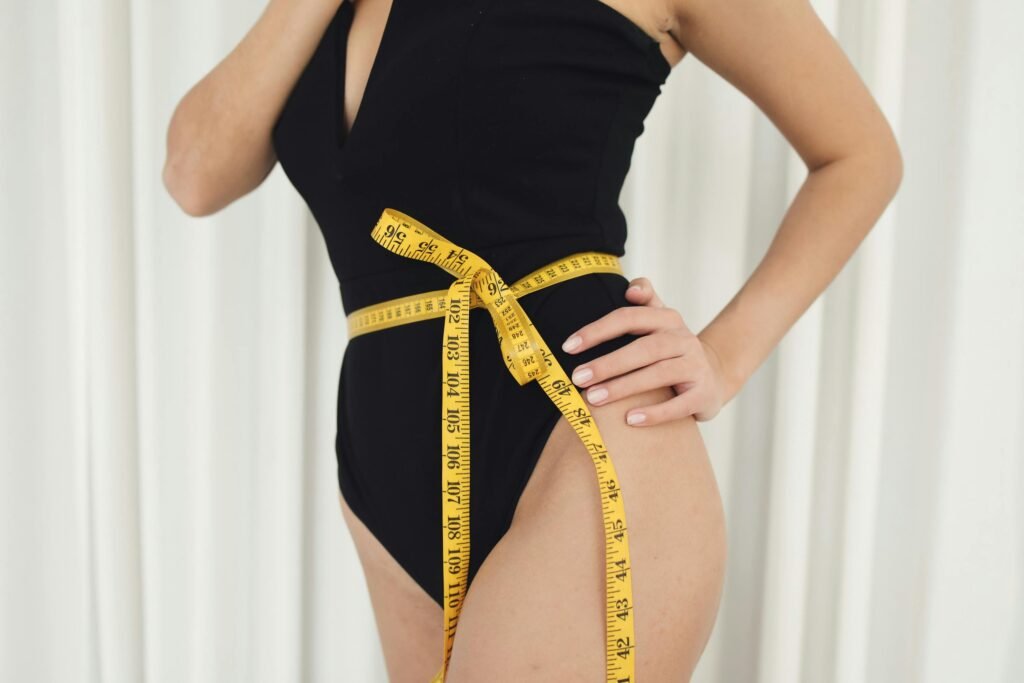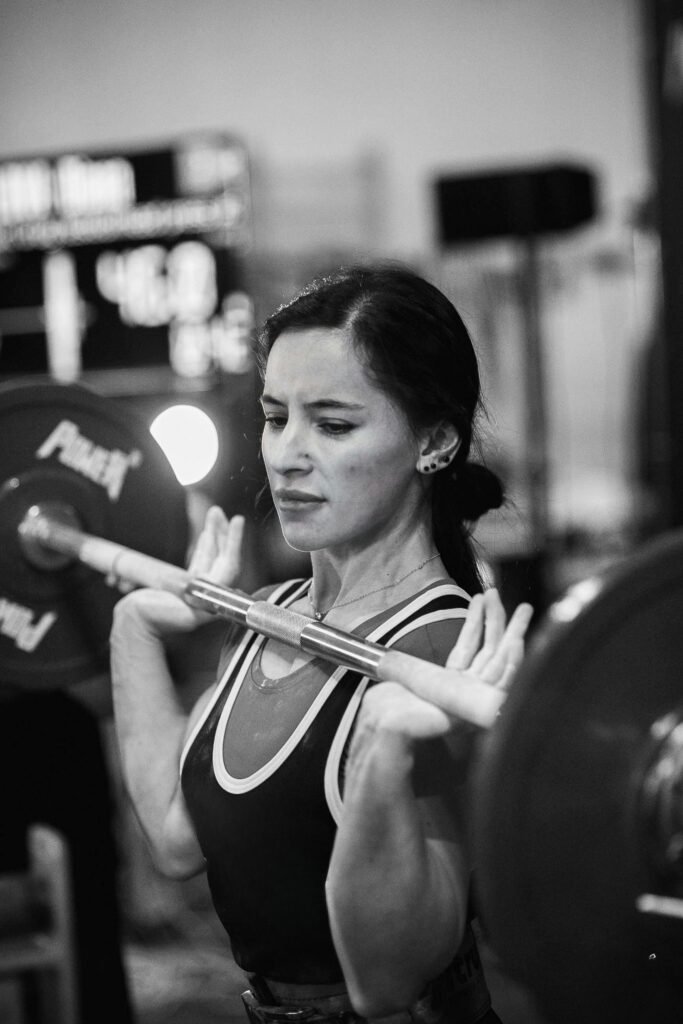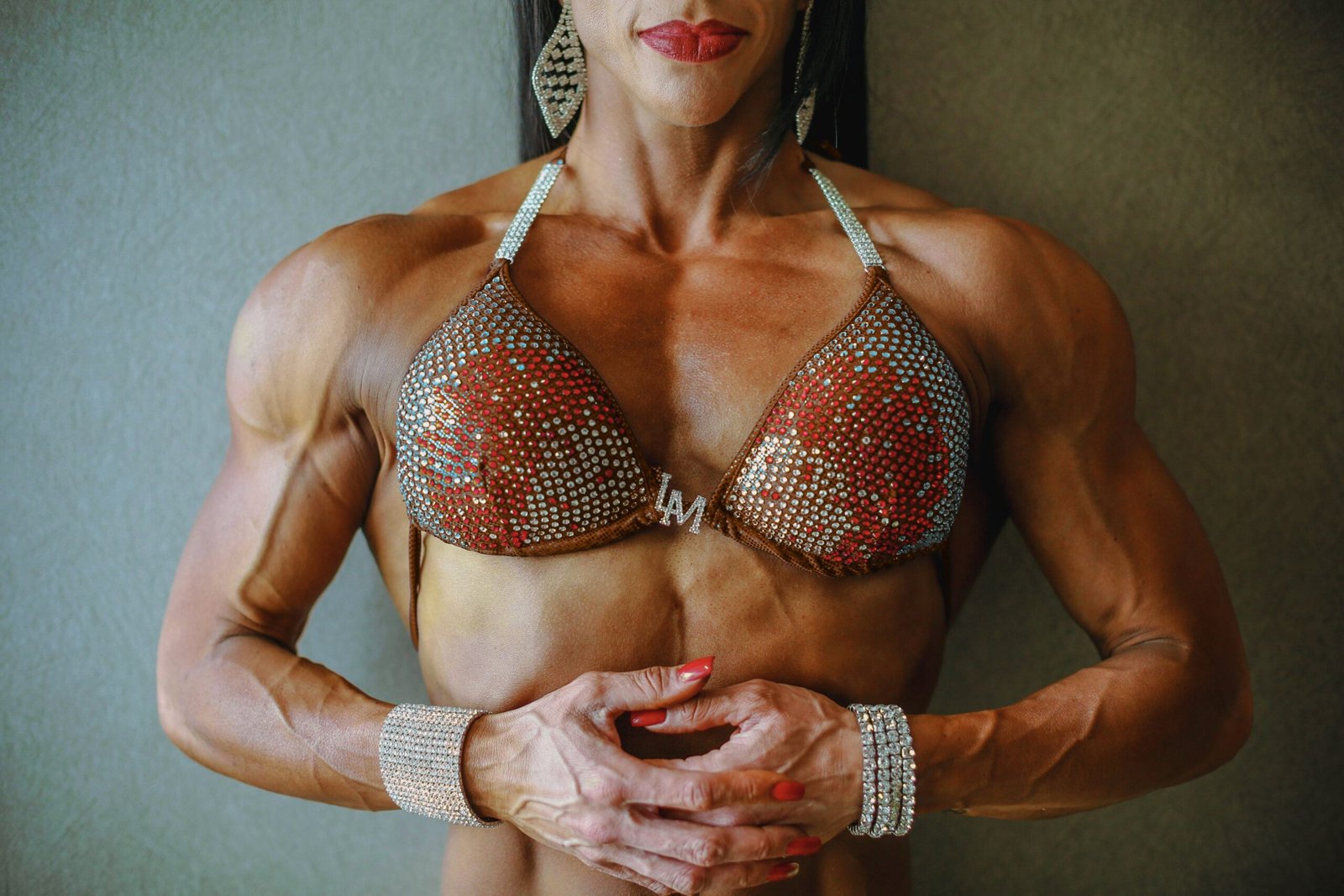
When you see a female bodybuilder on stage, it’s easy to admire the discipline. The sculpted muscles, the long hours in the gym—it looks powerful. But what we don’t always see is the cost behind that image: the joint pain, the hormonal chaos, the loneliness of strict diets, and sometimes even the broken health that comes years later.
This isn’t written to shame anyone who chooses bodybuilding—it’s written with empathy, because too many women walk into it thinking it’s the only way to be “strong.” At Salut Champs, we want you to know the truth: you don’t need to break your body to prove your power.
The Physical Toll Over Time
Lifting extremely heavy weights every day feels like strength in the moment—but our bodies remember. Many women discover later in life that their knees, hips, and backs carry scars from years of pushing past natural limits. It’s not weakness—it’s biology. Women’s joints are more vulnerable, especially with hormonal changes like menopause. And no stage medal is worth a lifetime of pain.
The Food Struggle Nobody Talks About
Yes, bodybuilders eat a lot. Too much, often. Calories skyrocket to 3,000+ a day, sugar intake goes way beyond healthy levels, and the body becomes a machine—always fed, never truly nourished. It’s draining to weigh every bite, to fear a night out with friends, to feel guilty for wanting to eat like a human being. That’s not freedom—it’s a prison disguised as discipline.
Steroids: A Shortcut with a Heavy Price
Some women are told that steroids (the “asteroids” whispered about in gyms) are just part of the game. But the truth is brutal: deeper voices, hair loss, changes in your face, disrupted cycles, liver damage, heart problems. Once your hormones are shaken, they rarely bounce back. What was meant to make you “look strong” can leave you feeling broken.
The Silent Symptoms
It’s not only visible. Women in strength sports often struggle with urinary incontinence from years of lifting too heavy. Some face osteoporosis later because extreme dieting destroyed their estrogen levels. These are things rarely posted on Instagram—but they’re real, and they matter.
When Discipline Turns Extreme: A Human Breakdown
1. Joint Degeneration & Surgeries
What it means:
When you lift very heavy weights over and over, year after year, your joints (knees, hips, shoulders, back) wear down faster than normal. Think of it like the tires on a car—if you push them past their limits daily, they’ll wear out sooner. That’s why many pro bodybuilders end up with knee replacements, hip surgeries, or chronic back pain.
Human example: Ronnie Coleman, one of the strongest bodybuilders ever, can barely walk today without help because of the surgeries on his spine and hips.
👉 Takeaway for women: Lifting is amazing for your health—but extremes can destroy your joints long before old age ever does.
2. Caloric and Protein Stress
What it means:
To “bulk up,” bodybuilders eat way more food than the body is meant to handle—sometimes 4,000–6,000 calories a day. Not only is it too much, but the huge amounts of protein (like 300g+ daily) can stress your liver, kidneys, and digestive system. It’s like forcing your organs to work overtime, every single day, without rest.
Human picture: Imagine eating double or triple what your body actually needs, even when you’re not hungry, because “you have to grow.” That’s not fueling—it’s force-feeding. And over time, your organs pay the price.
👉 Takeaway for women: Eating enough is healthy. Eating mountains of food and sugar “for size” is not health—it’s punishment in disguise.
3. Stimulants, Drugs, and Unsafe “Cuts”
What it means:
To get stage-ready, many athletes turn to stimulants, fat burners, diuretics (water pills), or steroids. “Cutting” often means dehydrating yourself so much that veins and muscles “pop” under the skin. This is dangerous. Dehydration can cause kidney failure, heart problems, and even death (sadly, this has happened).
And the drugs? They might make muscles grow faster, but for women they wreak havoc: deep voices, hair loss, mood swings, damaged fertility, and aging that hits faster than nature ever intended.
👉 Takeaway for women: Shortcuts might give a temporary “look,” but they rob you of your natural health, beauty, and energy.
Putting It All Together
When you put all of this together, it means that bodybuilding taken to the extreme is not fitness—it’s slow self-destruction.
The reality is stark: while female bodybuilders sculpt the body they desire, many pay a heavy price:
- Tendons and joints wear down faster
- Your organs get overworked.
- Hormones get disrupted
- Hormonal imbalance weakens bones
- Massive calories and sugar strain metabolism
- Steroid use accelerates aging and health damage
- Your life becomes draining: measuring food, fearing social meals, and punishing your body instead of enjoying it.
That’s not strength. That’s suffering disguised as discipline. this isn’t about judgment—it’s about awareness and empowerment.
10 Facts “Strong Today, Broken Tomorrow: The Untold Story of Female Bodybuilding”
Here are real stories and science-backed truths that every woman considering high-level physique should know—spoken not with judgment, but with care and empathy.
1. Spinal Injury Leaves a Woman in a Wheelchair—But She Fights Back
Sharla Peterson, a fitness enthusiast and bodybuilder, suffered a serious back injury during squats that left her wheelchair-bound. Yet, she fought through incomplete paraplegia to compete professionally again. This bravery shines a light on how fragile the spine can become under extreme strain.
ABC15 Arizona in Phoenix (KNXV)12 News
2. Sudden Heart Failure at 37: A Tragic Reminder
Lorena Blanco, a pro bodybuilder preparing for Ms. Olympia, collapsed and died suddenly from a heart attack just weeks before her big competition. Her passing is a heartbreaking signal that even those who look strong on the outside may be falling apart on the inside.
The Sun
3. Death from Dehydration: A Life Cut Short
Jodi Vance, a 20-year-old bodybuilder, tragically died from severe dehydration and heart complications during a fitness event. Her family’s plea—“put your health first”—echoes loudly in a sport where stage-ready means going to the limit.
People.comNew York Post
4. Double the Risk: Steroid Use Is Alarming
Female bodybuilders are 12 times more likely than the average woman to use anabolic steroids—substances that can irreversibly alter your voice, hair, cycles, heartbeat, and future.
ABC
5. Stroke from Hidden Heart Defects
A female bodybuilder suffered a stroke at age 25 and again at 28 due to a type of heart failure called dilated cardiomyopathy. Her ejection fraction dropped dangerously low—just 10%, compared to a healthy 55–65%—requiring a pacemaker-like device.
www.heart.org
6. Elevated Risk of Sudden Cardiac Death
A study of 20,000 bodybuilders found that individuals with extreme muscle mass had twice the risk of sudden cardiac death compared to the general population.
The Sun
7. Knee Injuries Mirror Lifelong Strain
Countless female lifters suffer from chronic knee pain and ACL injuries. While we don’t always hear their names, the long-term consequences—surgeries, pain, movement limitations—are widely felt in aging athletes. Though we couldn’t find specific names easily, the high incidence is real in sports medicine literature.
8. Injury Doesn’t Always End the Dream
Charley Alexander turned her ACL rupture into purpose, transforming from athlete to pro bodybuilder through rehabilitation. Her story shows that while injury isn’t the end, pushing through requires balance, support, and mindset shifts.
V3 Apparel
9. Stroke Survivor: Strength With a Cost
Tina Schüßler, once a formidable pro bodybuilder, collapsed from a congenital heart defect stroke. She was paralyzed on one side, underwent cardiac surgery, but returned to competition with strength of spirit—not just muscle.
Wikipedia
10. Toxic Regression: A Death Linked to Drugs and Isolation
Joanna Thomas, once a rising star “Buff Barbie,” suffered from addiction to steroids and pain medications. Her death at 43, caused by multiple drug toxicity, reminds us how mental health and physical ruin often go hand in hand.
What Happens After You Walk Away
Here’s the part few think about: bodybuilding is not forever. One day, you will stop. And when that day comes, the strict diets, the stage-ready look, and the sacrifice will feel heavy. Many athletes face depression, binge eating, or identity loss once they retire, because their life revolved around one thing. It’s draining—not just on the body, but on the soul.
Life is too full to miss out on Zumba classes, bike rides, running at sunrise, tennis with friends, dancing on weekends. That’s where fitness becomes joy. That’s where health is real.
“Life After the Stage: What Really Happens When Bodybuilding Ends”
Continuing the Story: What Happens When Bodybuilding Stops (Facts 11–15)
Even the most dedicated will eventually step off the stage or step away from the macros and grind. What happens then isn’t just physical—it’s emotional. Here’s the real deal many women face afterward:
11. Post-Show Rebound Means More Than Just Muscle Loss
After months of calorie restriction, your metabolism slows. When you suddenly eat normally again, your body stores calories—fast. Fat overshoot is real: it’s when you gain back more weight than you initially lost. This isn’t muscle—it’s fat and water. ([turn0search7]) That body you worked so hard for can feel foreign in a week.
12. Loose, Droopy Skin Tells a Story
Rapid weight loss—or gain—stretches your skin beyond its natural ability to snap back. Collagen and elastin fibers can’t fully recover, leading to sagging and stretch marks. And the more drastic the change, the greater the sag. ([turn0search8]) Your physical transformation may be dramatic—but your skin often lags behind emotionally.
13. Recovery Doesn’t Need to Mean “Undoing”
The myth of explosive muscle rebound is tempting—but false. Real research shows post-show recovery takes time. Muscle growth doesn’t magically spike—if anything, it may stagnate or regress unless calories are managed carefully. Your body isn’t designed for extremes without consequences. ([turn0search7])
14. Muscle Helps, But Only Gradually
Strength training supports skin health—yes—but it’s not a fast fix. Lifting can improve skin elasticity and bolster collagen by reducing inflammation, especially as you age. ([turn0search9]) But the journey is slow. Changes take time, compassion, and balance.
15. The Body—and the Woman—Are More Than the Grind
When you exit the rigid routines, the mental space opens. You rediscover joy in movement: dancing, tennis, biking, or sunrise runs. That’s real strength—a body that moves with freedom, not fear. Choosing balance over burnout doesn’t make you soft. It makes you wise.
The Emotional Reality
Bodybuilding isn’t forever. And that’s okay. But the shift isn’t just about dropping lifting days—it’s about reclaiming a life filled with emotional and physical health.
Imagine enjoying meals without guilt, moving your body without fear of derailing progress, and knowing strength is more than a number on a scale.
A Woman’s Strength is Not About Looking Like a Man
Here’s the truth: women can get strong, toned, and powerful naturally. But no matter how hard you try, your muscle mass will never be like a man’s—because you weren’t built to be one. And why would you want to?
In a world that expects you to be “tough,” remember: choosing care over extremes isn’t weakness—it’s courage. You don’t need to match a man’s strength. You’re not diminishing yourself by choosing longevity over short-term gains.
“A woman who looks for equality in a world built for men lacks ambition. We are more. We don’t need to be like men—we set our own standard of power.”
Strength is not measured by how heavy you lift. Strength is living pain-free in your 50s, 60s, and 70s. Strength is balancing health with joy. Strength is saying: I choose me. My health. My future. My way.
A Message from the Heart to Every Woman
Women, your strength isn’t defined by how heavy you lift or how sharp your muscles look. It’s in your breath over the bar, your smile at the end of a workout, your body that carries you through decades, not just a decade on stage.
Strength isn’t about breaking yourself to fit someone else’s mold. It’s about building a life where you can stay powerful without paying your future in pain.
The Salut Champs Message
We’re not against lifting—we believe in it. But we believe in moderation, in moving with joy, in protecting your body as much as you challenge it.
Being fit doesn’t mean living on a stage. Being strong doesn’t mean copying a man’s body. Being powerful doesn’t mean destroying your health.
You are more. You are smarter. You are stronger. And the truest power is building a life you can love—not just a body you can show.